RPI inflation, 2013 to July 2026
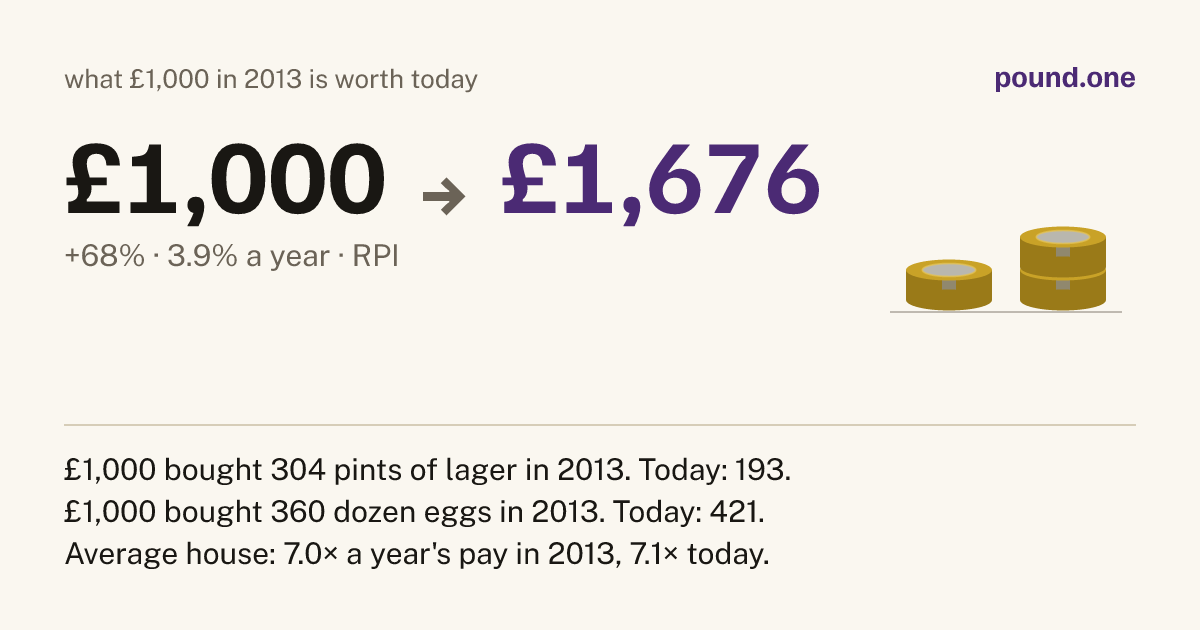
£1,000 in 2013 is £1,676 today
That £1,000 bought 304 pints of lager in 2013. Today it buys 193.
Prices up 68%3.9% a year on averageMultiply by 1.68

What £1,000 buys
Official average shop prices, not a basket. Things marked as outrunning inflation got dearer faster than everything else; things that lagged got relatively cheaper.
| Item | 2013 | Today |
|---|---|---|
| pints of lager£3.29 then, about £5.17 today | 304 | 193 |
| dozen eggslagged inflation£2.78 then, about £2.38 today | 360 | 421 |
| first-class stampsoutran inflation60p then, £1.80 today | 1,667 | 556 |
| litres of unleadedlagged inflation£1.34 then, about £1.47 today | 746 | 682 |
| sliced white loaveslagged inflation£1.30 then, about £1.50 today | 769 | 668 |
| kg of roasting chickenlagged inflation£3.30 then, about £4.04 today | 303 | 247 |
| packs of 20 cigarettesoutran inflation£7.76 then, about £17.76 today | 129 | 56 |
| kg of bananaslagged inflation88p then, about £1.09 today | 1,136 | 917 |
| kg of rump steaklagged inflation£16.02 then, about £20.21 today | 62 | 49 |
| boxes of tea bagslagged inflation£2.02 then, about £2.83 today | 495 | 354 |
| pints of bitterlagged inflation£2.87 then, about £4.07 today | 348 | 246 |
| pints of milk46p then, about 70p today | 2,174 | 1,439 |
| nips of whisky£2.45 then, about £4.17 today | 408 | 240 |
| Same money, adjusted for inflation | £1,000 | £1,676 |
The ONS stopped publishing these average prices in January 2025. Today's figures are that last reading moved on with inflation, so treat them as close rather than exact.
Houses and wages
Inflation is one story. What people earned, and what a home cost, are the other two.
Average house
£168,928 → £278,784
Up 1.7×, against 1.7× for prices generally
Average pay
£24,232 → £39,260
A year's average earnings, up 1.6×
Years of pay for a house
7.0 → 7.1
Average house price divided by average annual pay
If it had tracked wages
£1,620
What £1,000 in 2013 would be today if it had grown with pay rather than prices